Product Overview
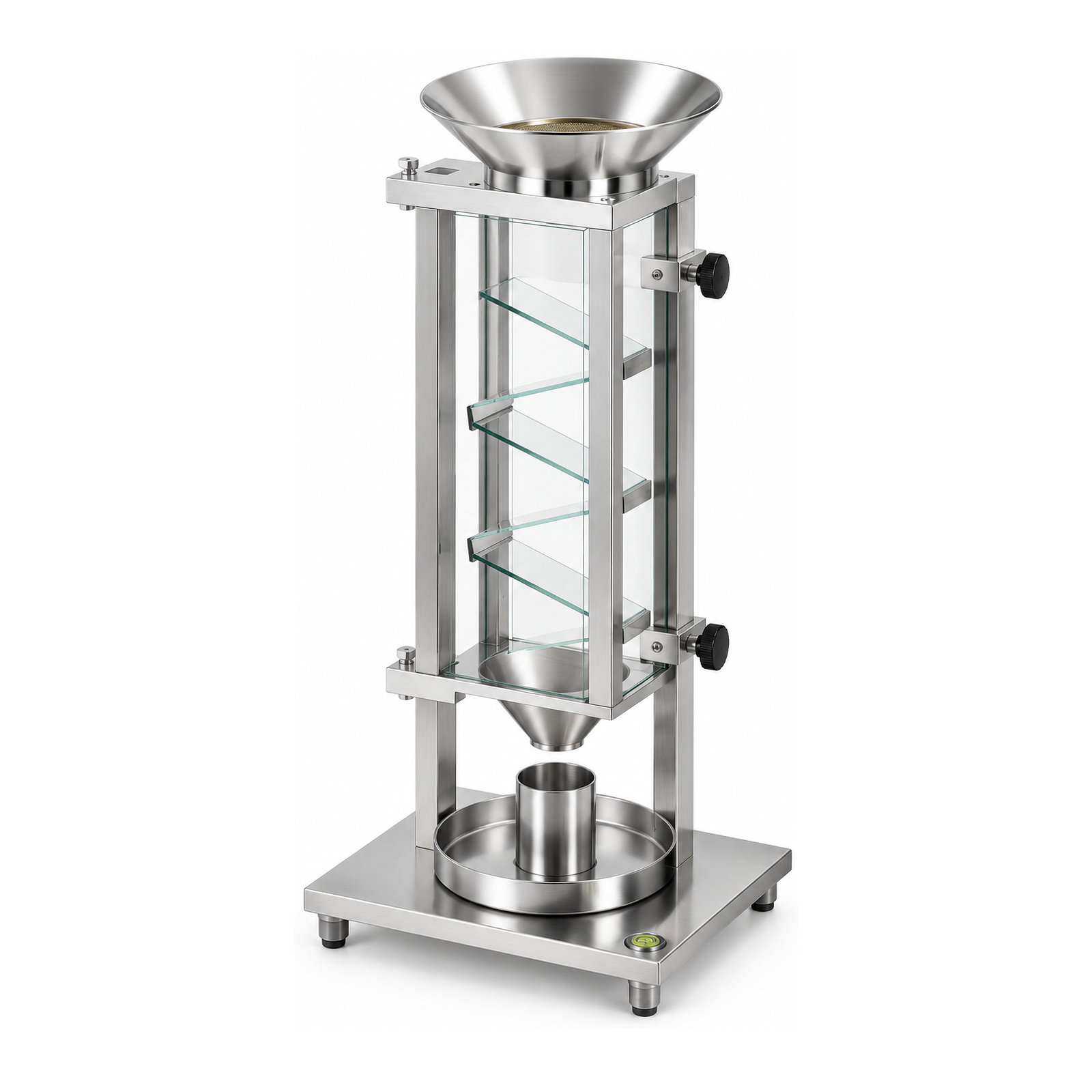
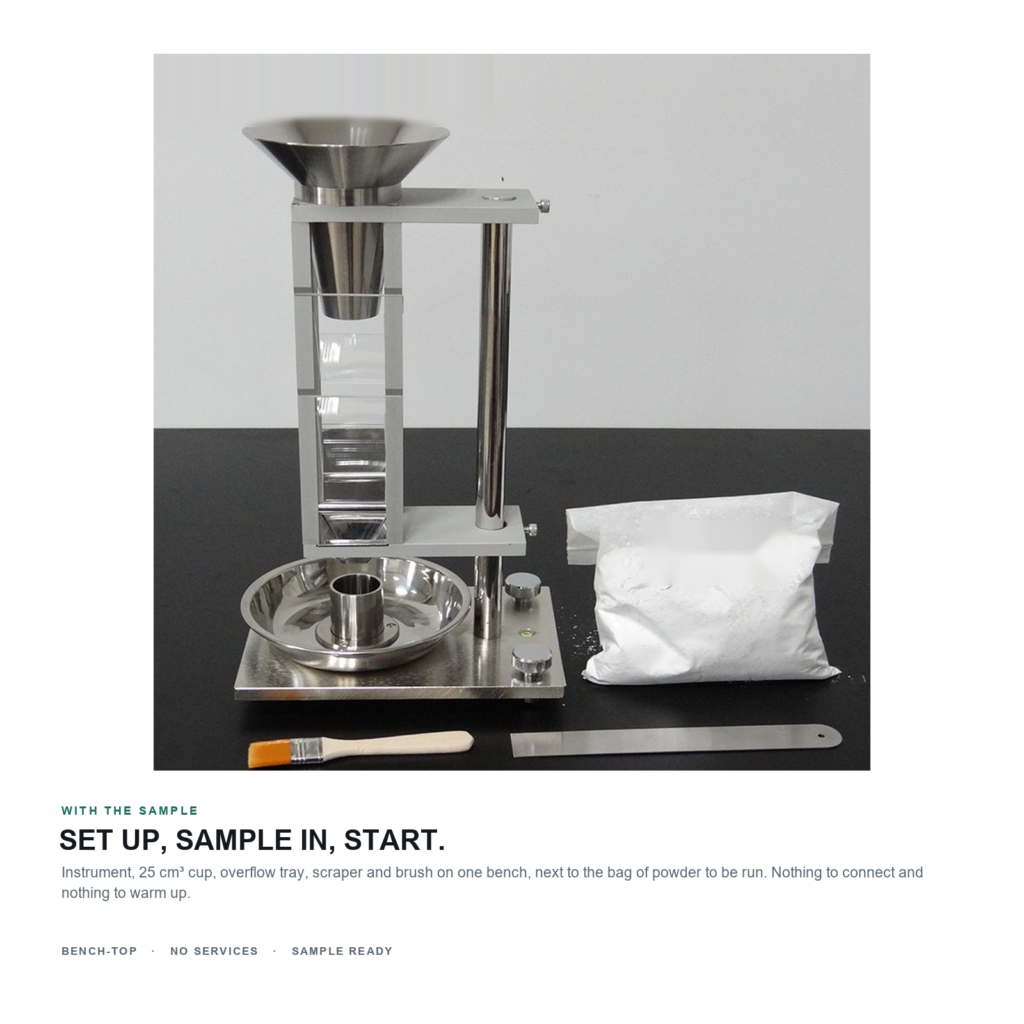
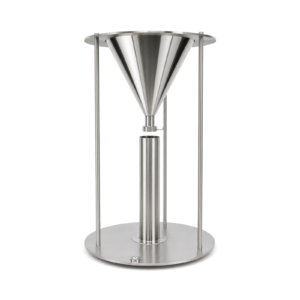
The RT-730E Scott Volumeter is designed to determine the apparent density of metallic powders using the Scott volumeter method. It is suitable for metal powders, alloy powders, and metal powders used in 3D printing and powder metallurgy.
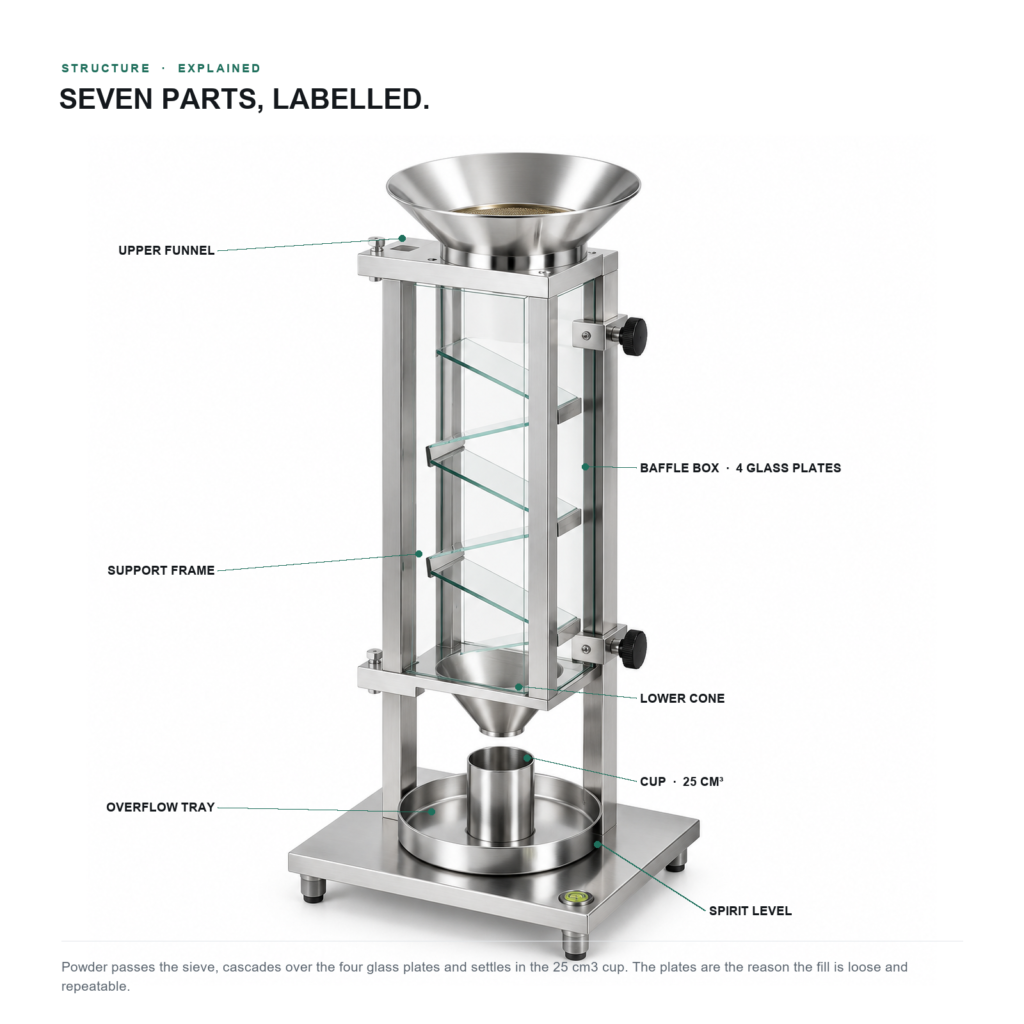
This powder apparent density tester is particularly useful for metallic powders that do not flow freely through a 5 mm orifice, where the Scott volumeter method is applicable. The instrument uses a series of inclined baffles to guide the powder into a measuring cup under controlled conditions, helping determine the apparent density of the powder.
Working Principle
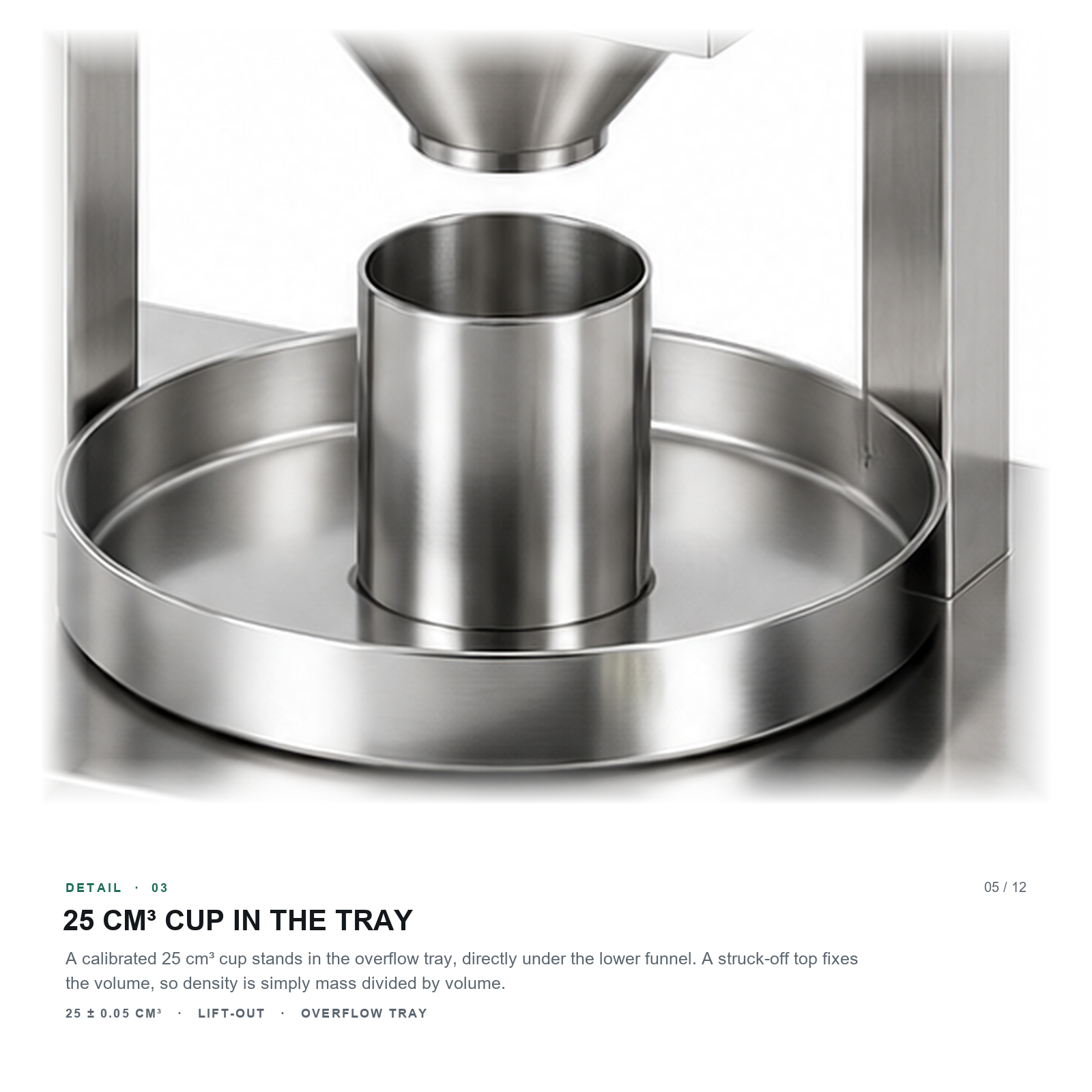
A powder sample passes through a specified sieve and a series of inclined baffles before collecting in a measuring cup of known volume. After the cup is filled, excess powder is carefully removed and the sample is weighed.
The apparent density is calculated by dividing the mass of the powder by the known volume of the measuring cup.
This method is suitable for evaluating the apparent density of applicable metallic powders and supporting powder quality control in manufacturing and research laboratories.
Technical Specifications
| Parameter | Specification |
|---|---|
| Model | RT-730E |
| Instrument Name | Scott Volumeter |
| Test Method | Scott Volumeter Method |
| Applicable Standard | ISO 3923-2:1981 |
| Test Purpose | Apparent Density of Metallic Powders |
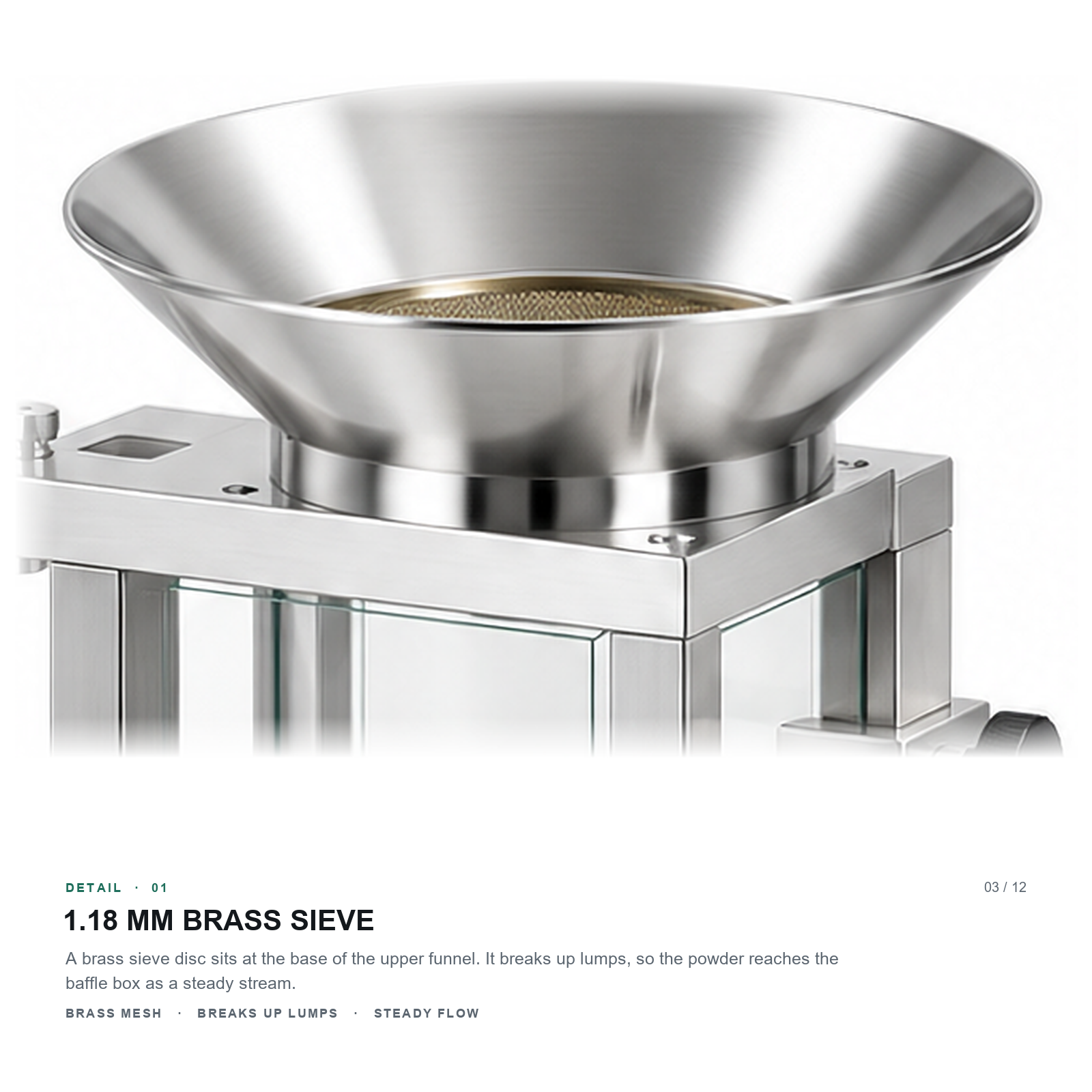
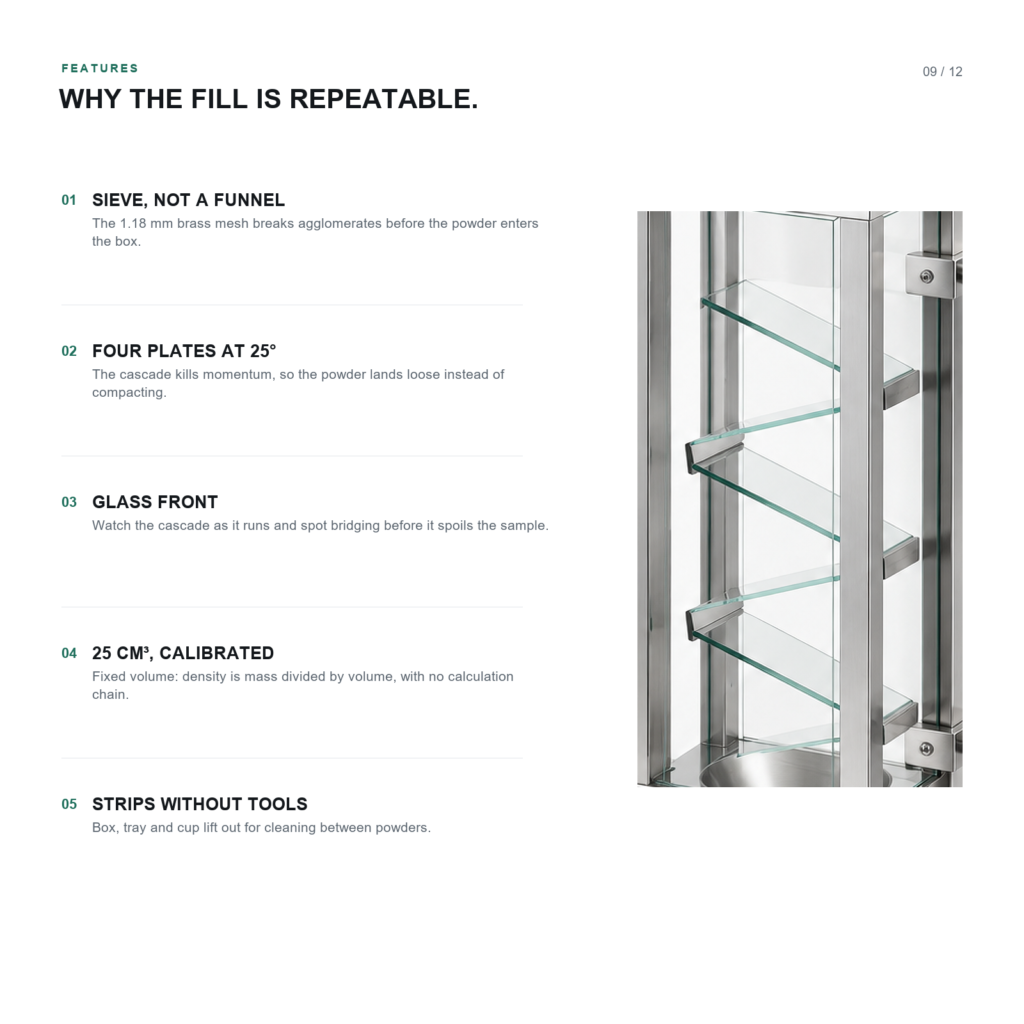
| Sieve Aperture | 1.18 mm |
| Sieve Material | Brass |
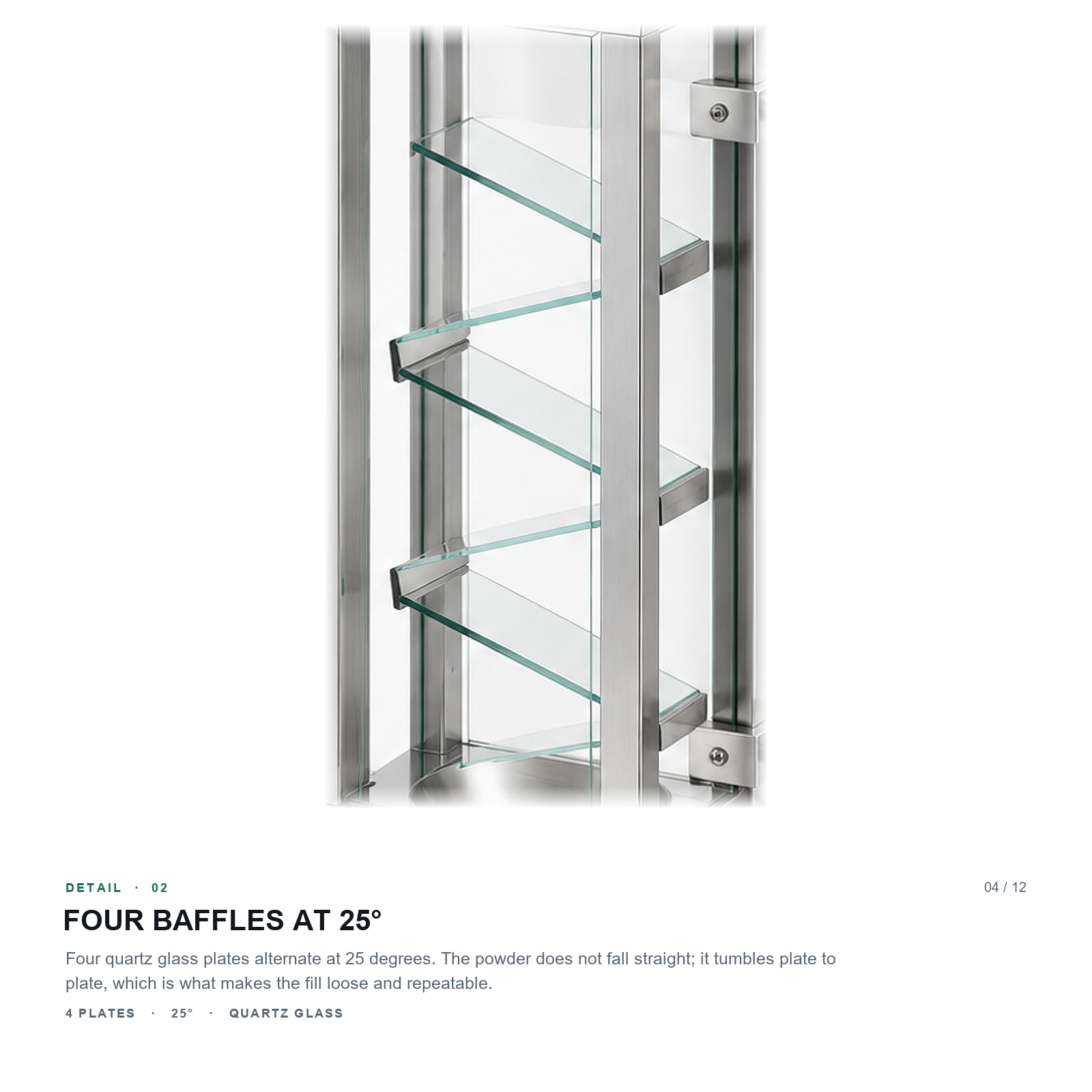
| Number of Baffles | 4 |
| Baffle Material | Glass |
| Measuring Cup Capacity | 25 ± 0.05 cm³ |
| Measuring Cup Internal Diameter | 30 ± 1 mm |
| Balance Weighing Accuracy | ± 0.05 g |
| Minimum Test Sample Volume | 100 cm³ |
| Operation | Manual |

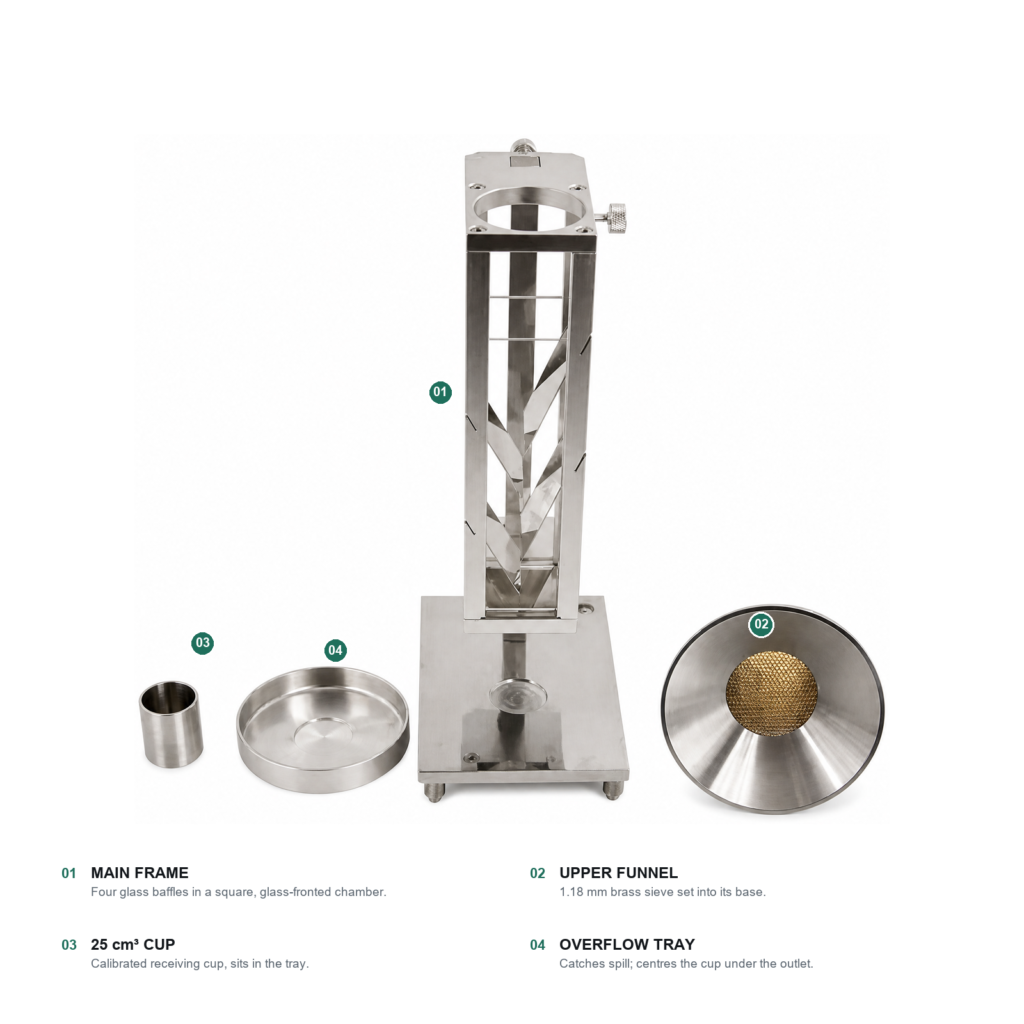
Main Features
- Scott Volumeter Method: Designed for apparent density testing of metallic powders using the Scott volumeter method.
- Stainless Steel Construction: Key components are made of stainless steel for durability and ease of cleaning.
- Multi-Stage Baffle System: Alternating inclined baffles guide the powder into the measuring cup.
- Known-Volume Measuring Cup: Enables apparent density calculation based on powder mass and cup volume.
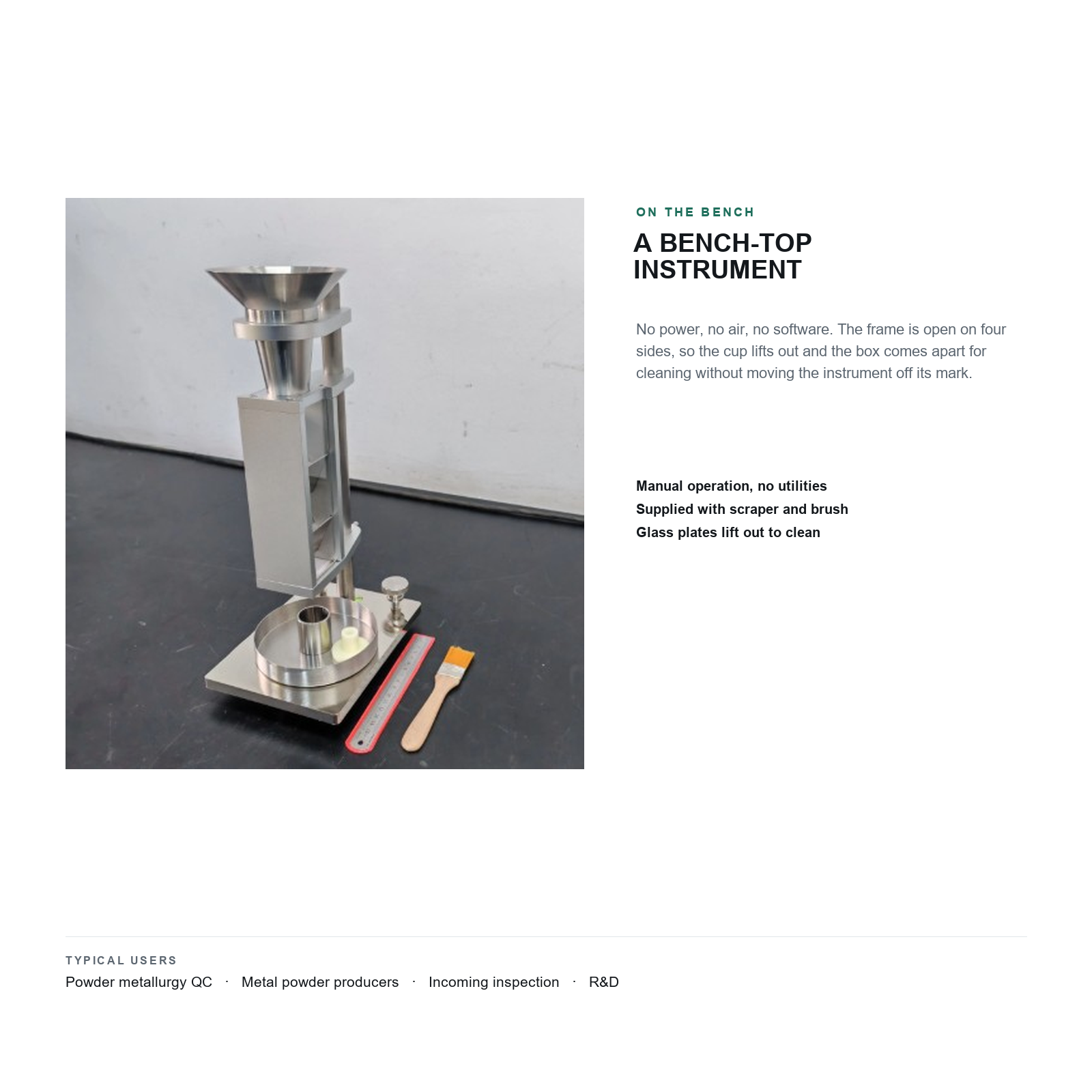
- Manual Operation: Simple mechanical operation without requiring electrical power.
- Convenient Cleaning: A brush is provided to assist with cleaning and, where appropriate, powder transfer.
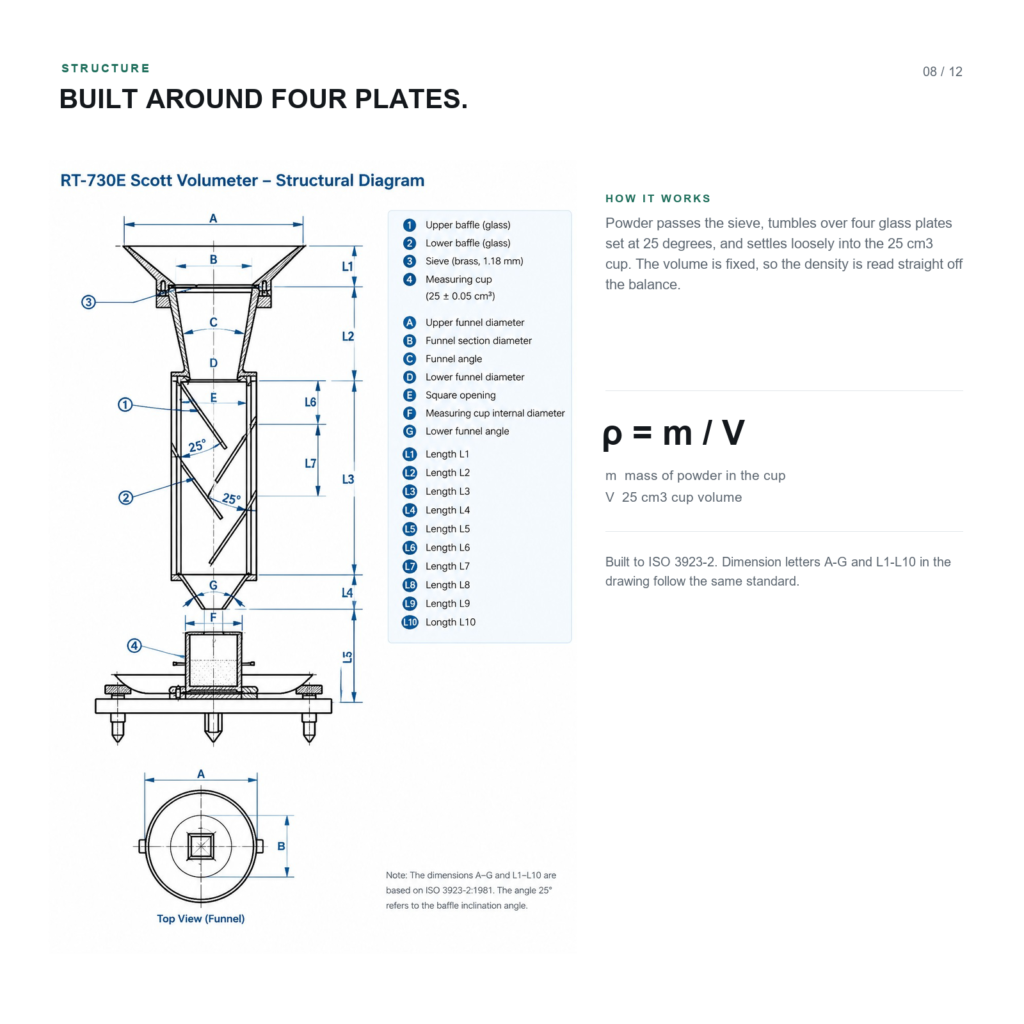
Structural Dimensions
| Mark | Dimension | Specification |
|---|---|---|
| A | Upper Funnel Diameter | Ø112 mm |
| B | Funnel Section Diameter | Ø50 mm |
| C | Funnel Angle | 15° |
| D | Lower Funnel Diameter | Ø30 mm |
| E | Square Opening | 12.5 × 12.5 mm |
| F | Measuring Cup Internal Diameter | Ø30 ± 1 mm |
| G | Lower Funnel Angle | 60° |
| L1 | Length L1 | 30 mm |
| L2 | Length L2 | 85 mm |
| L3 | Length L3 | 152 mm |
| L4 | Length L4 | 26 mm |
| L5 | Length L5 | 50 mm |
| L6 | Length L6 | 26 mm |
| L7 | Length L7 | 65 mm |
| L8 | Length L8 | 20 ± 1 mm |
| L9 | Length L9 | 8 mm |
| L10 | Length L10 | 40 mm |
| 1 | Upper Baffle Dimensions | 50 × 50 mm |
| 2 | Lower Baffle Dimensions | 40 × 40 mm |
| 3 | Sieve | 1.18 mm brass sieve |
| 4 | Measuring Cup Capacity | 25 ± 0.05 cm³ |
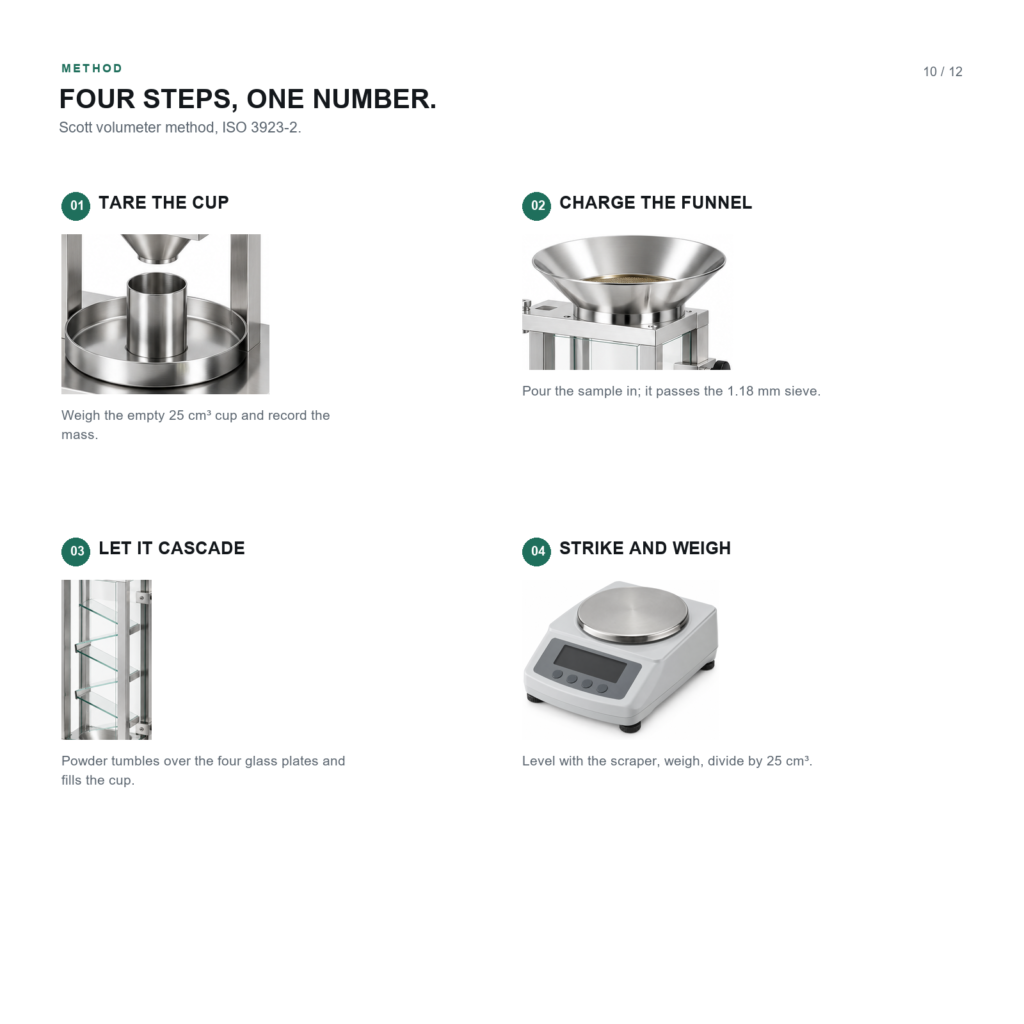
Operating Procedure
Step 1: Tare the Measuring Cup
Place the empty measuring cup on the balance and tare the balance to zero.
Step 2: Load the Powder Sample
Place the measuring cup on the instrument base. Using a small spoon, carefully pour the powder sample onto the sieve at the top of the Scott Volumeter. Allow the powder to pass through the baffle box and square funnel into the measuring cup.
Step 3: Fill the Measuring Cup
Continue feeding the sample until the powder forms a cone above the measuring cup and excess powder overflows around the rim. If the powder does not pass freely through the sieve, gently use a soft brush to help it pass through, as permitted by the applicable test procedure.
Step 4: Level the Powder
Carefully remove the excess powder using a straightedge or scraper. Hold the scraper at approximately 45° to the horizontal and level the powder in one direction, following the applicable test procedure.
Step 5: Weigh the Powder
Place the filled, leveled measuring cup on the tared balance. Record the mass of the powder to the nearest 0.05 g.
Calculation of Test Results
The apparent density of the powder is calculated using the following formula:
ρₐₛ = m / V = m / 25
Where:
- ρₐₛ = Apparent density of the powder (g/cm³)
- m = Mass of the powder in the measuring cup (g)
- V = Nominal volume of the measuring cup (25 cm³)
Perform three measurements and calculate the arithmetic mean of the three results. Report the average apparent density to the nearest 0.01 g/cm³.
If the difference between the highest and lowest measured values exceeds 1% of the average value, report the highest and lowest values along with the average.
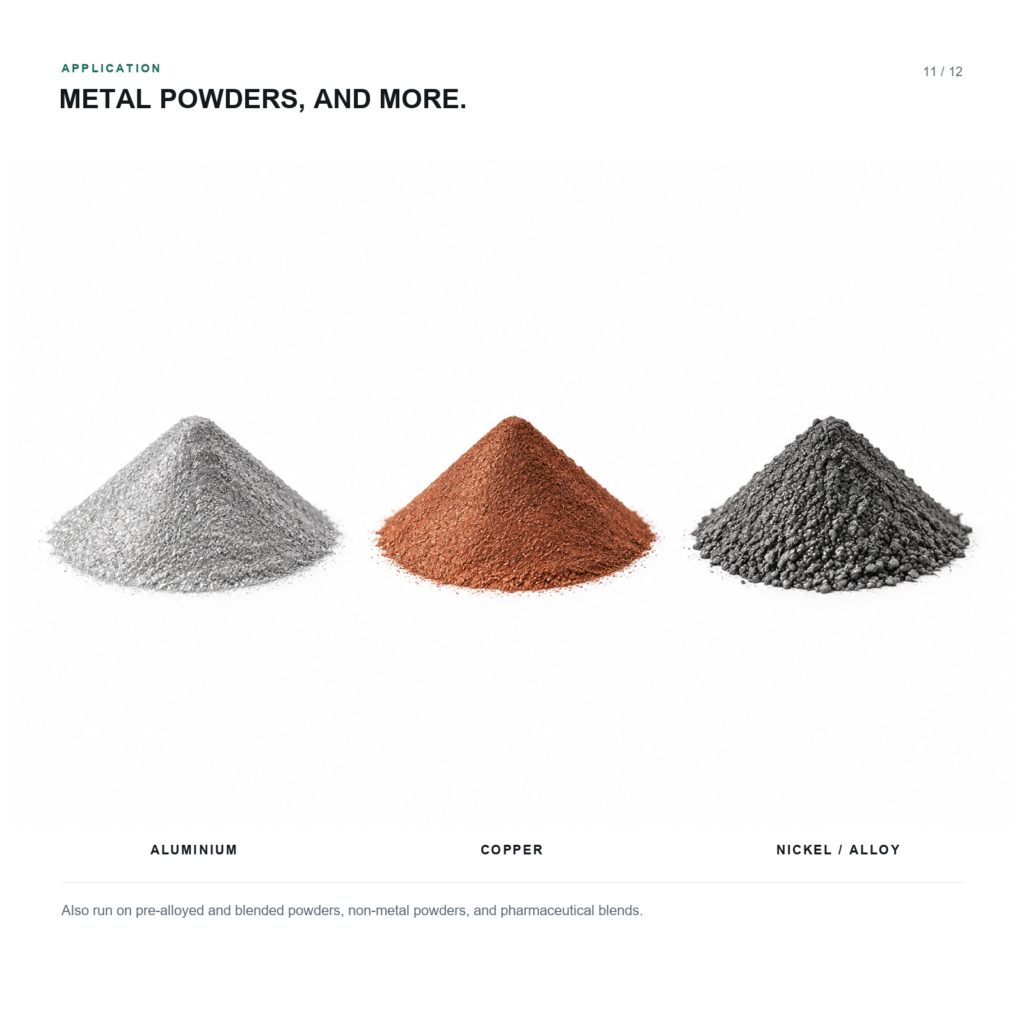
Applications
The RT-730E Scott Volumeter can be used for apparent density testing of suitable powder samples in powder metallurgy, metal processing, and additive manufacturing.
Typical applications include:
- Metal Powders: Apparent density testing of metallic powders.
- Alloy Powders: Evaluation of the apparent density of alloy powders.
- Metal 3D Printing Powders: Testing metal powders used in additive manufacturing.
- Powder Metallurgy: Powder characterization and quality control in production and laboratory environments.
- Other Suitable Powders: Certain non-metallic or pharmaceutical powders may be testable when the selected method and applicable requirements are appropriate. ISO 3923-2 specifically addresses metallic powders.
Applicable Standard
The Scott volumeter method is described in ISO 3923-2:1981, which addresses the determination of the apparent density of metallic powders that do not flow freely through a 5 mm orifice.
Please confirm the applicable standard and testing requirements for your specific powder and intended application before testing.
Why Choose the RT-730E Scott Volumeter?
The RT-730E provides a practical manual method for determining the apparent density of suitable metallic powders. Its stainless steel construction, multi-stage baffle design, and known-volume measuring cup make it suitable for routine powder characterization and quality control.
If you need a Scott volumeter for metal powder apparent density testing, including suitable alloy and metal 3D printing powders, the RT-730E is a practical option for your laboratory.
Contact RIGHT Instrument for product details, specifications, and assistance in selecting a suitable powder testing instrument.


RIGHT's Services Always Go Extra Mile
No more endlessly wasting time on other lousy suppliers. RIGHT's goal is to let you sit back and relax. We take care of all the dirty works, including trade stuff, clearance and logistics, etc. Our consultant will keep you informed of the trade progress throughout.
Related products
-
Tapped Density Tester | Tap Density Analyzer for Powder RT-100
-
GB/T 16913 Dust Bulk Density Tester | RT-730F
-
RT-1076B Dry Laser Particle Size Analyzer
-

Angle of Repose Tester for Powder Flowability (RT-730D)
-
ISO 3944 Granular Fertilizer Loose Bulk Density Tester (RT-730C)
-
RT-730 Plastic Apparent Density Tester
-

RT-1711 Digital Infrared Halogen Moisture Analyzer Price